If you live in Yerevan or any other Armenian city, you walk past tuff and basalt facades every day, perhaps without thinking about how different these stones are from marble or granite. Tuff and basalt are volcanic in origin, and that changes everything — both the cleaning approach and the protection approach.
Why tuff needs a different approach
Tuff — Armenia's most symbolic building material — is a soft, porous volcanic stone. Unlike marble's dense, closed surface, tuff has natural micro-pores that let the stone "breathe," but also make it more vulnerable to moisture, grime and aggressive chemicals. Cleaning with harsh products or high-pressure water can break down the stone's surface, permanently altering its appearance and structure.
Why basalt needs a different approach
Basalt is the opposite extreme: an extremely dense and hard volcanic stone that is practically impermeable to water, but it has its own challenges. Basalt's dark color absorbs heat, which in winter can cause thermal stress and micro-cracking — especially if the stone was installed incorrectly (without expansion joints). In winter, on surfaces treated with salt, basalt can accumulate salt crystals that gradually break down the surface.
How to properly clean tuff facades
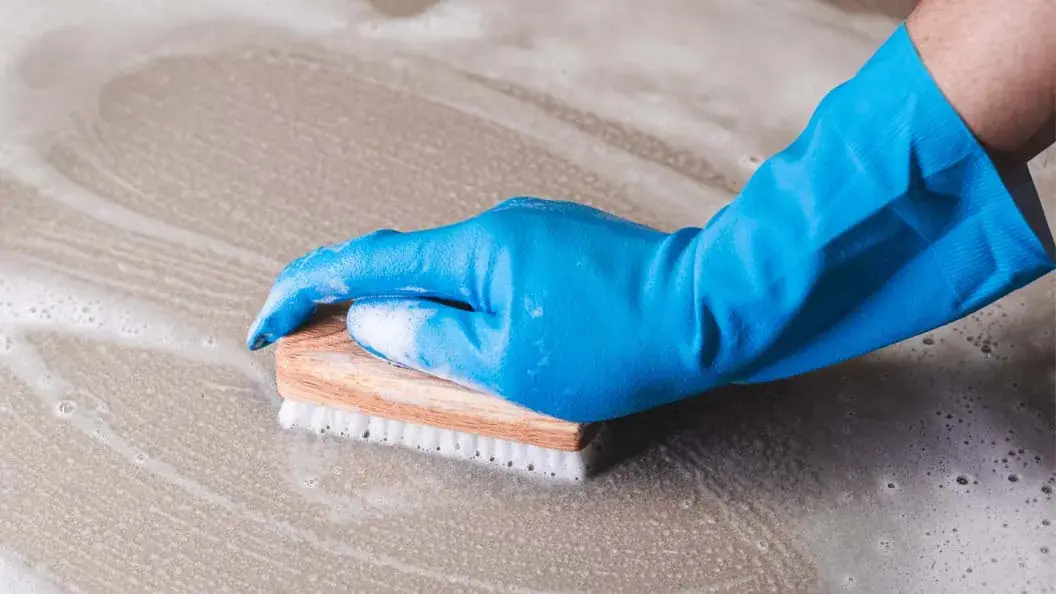
- Never high-pressure water: breaks down the porous surface. Use a soft brush and moderate water pressure.
- Never acidic or alkaline chemicals: only pH-neutral products made for natural stone.
- Hydrophobic sealing: every 2-3 years, especially for outdoor tuff elements, closes the pores while preserving the stone's breathability (a "breathable" protection, not a fully sealing one).
How to properly care for basalt surfaces
- Removing winter salt: clean white salt marks as soon as spring arrives, before they accumulate and damage the surface.
- Checking expansion joints: if you see cracks between basalt tiles, it's often a sign of thermal stress, not a material defect.
- Polishing is rarely needed: thanks to basalt's natural hardness, but when it is needed, it requires professional equipment — unlike marble.
Why this matters especially in Armenia
From Gyumri's historic tuff mansions to Yerevan's modern basalt cladding, these two stones are part of Armenia's identity. Improper cleaning and care can permanently damage centuries-old facades. Royal Stone specializes specifically in working with Armenian stone — not just imported marble and granite, but with knowledge of the specific characteristics of local tuff and basalt.
Have a tuff or basalt surface that needs care? See our maintenance service or contact us for a free consultation.